About Dr. Melissa London

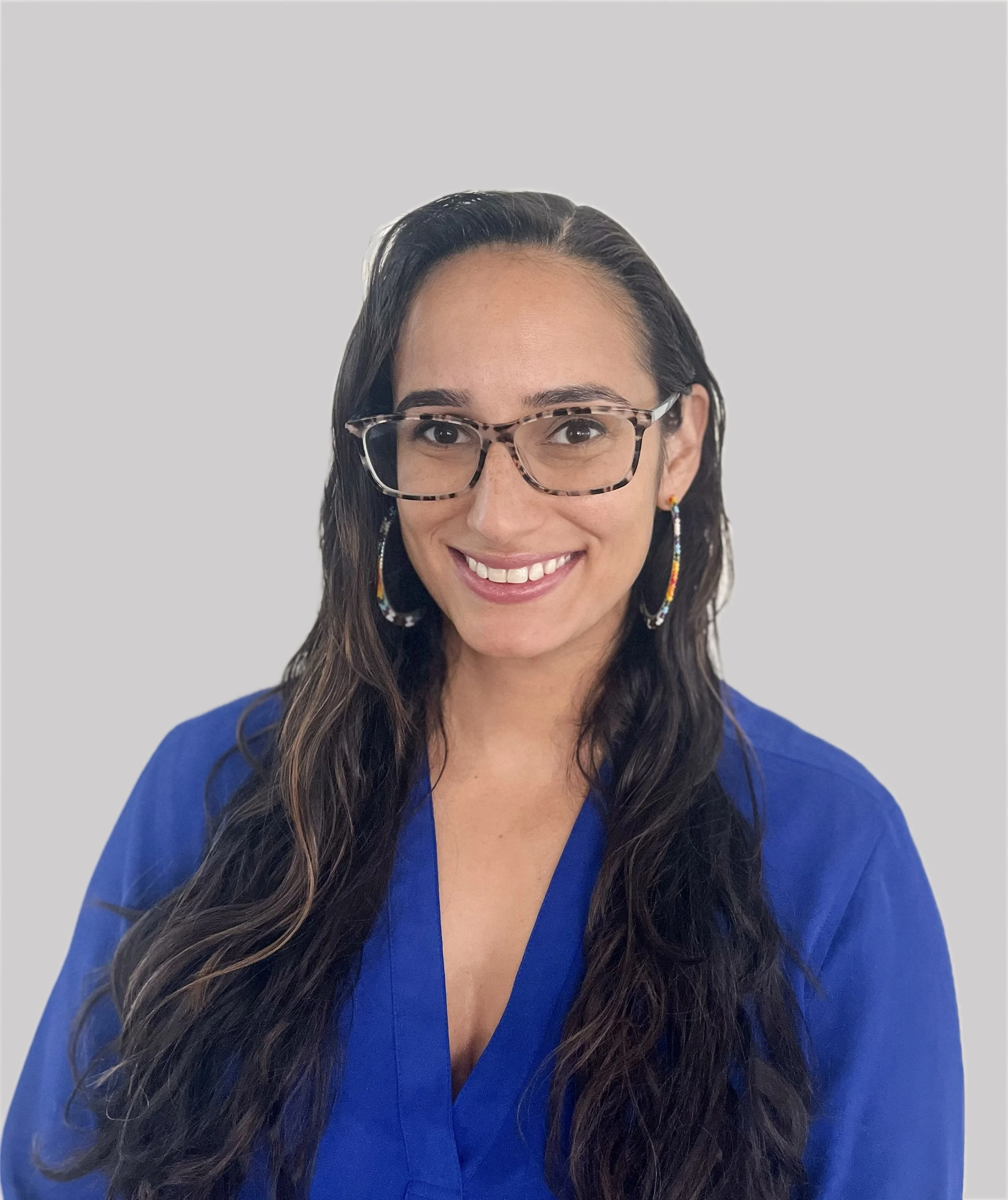
Melissa J. London, PhD
Licensed Clinical Psychologist in CA, NY, & PA
I am a licensed clinical psychologist, educator, and biracial ciswoman of color. Raised by Guyanese women and shaped by my roots in the Bronx and my life in the Bay Area, I bring a lived understanding of survival, care, and systemic change to every setting and relationship. I am the daughter of an immigrant, a wife, dog-mom, and mother to a kiddo whose world I would love to improve. I offer my gratitude to the Indigenous Peoples for stewarding these lands for generations, particularly the Muwekma Ohlone people who continue to thrive as vital members of the Bay Area. Read more in my land acknowledgment.
Clinical Leadership & Academic Roots
My professional path was shaped by a commitment to justice, healing, and elevating the voices of those who are too often unheard. I earned my Ph.D. in Clinical Psychology focused on researching and caring for those struggling with traumatic stress and the impact of interpersonal violence. I am committed to learning, and unlearning, advocating for, and advancing the access and quality of mental health treatment.
Before I launched my private practice in early 2025, I served in a clinical leadership role as the coordinator for substance use care at the San Francisco VA Medical Center, where I also provided individual therapy, group therapy, supervision, and didactics. I continue to remain involved in teaching, training, and consulting.
As an Assistant Clinical Professor – Volunteer at the University of California, San Francisco, an Adjunct Professor at the University of San Francisco, and Seminar Faculty at The Psychotherapy Institute’s group therapy training program, I continue to supervise and train clinicians, trainees, and community members. I aim to bridge the gap between rigorous research and real-world healing, ensuring that evidence-based care remains human, non-punitive, and deeply relational.
A Relational Approach to Healing
In private practice, I bring my clinical, academic, and leadership experience into longer-term, relational work through individual psychotherapy, group facilitation, and clinical consultation. While I am rigorously trained in empirically supported treatments, including Cognitive Processing Therapy (CPT), Dialectical Behavior Therapy (DBT), and harm reduction approaches, my style centers on steadiness, reflection, and flexibility rather than rigid instruction.
Learn more about My Approach here
Recovery as a Liberatory Practice
My understanding of recovery is as a journey. Not a task to be “completed” but also not a shadow meant to haunt people. It can be a process that is relational and liberatory. My approach focuses on empowerment to provide relief and healing, loosening the grip of shame while developing the skills, insight, and connection needed to live more fully and intentionally.
I have seen how compassion, solidarity, and endurance can transform the recovery journey. My work is deeply rooted in liberation psychology and a harm reduction praxis that focuses on care that is practical, sustainable, and grounded in your values. In our work together, I aim to create an environment where autonomy is paramount and where you feel respected, understood, and supported.
Consultation, Supervision, & Training
Beyond my clinical practice I provide specialized training and consultation for fellow clinicians, academic institutions, community providers, and healthcare organizations. I am deeply committed to expanding training opportunities for clinicians, trainees, and community providers. My goal is to improve access to effective, compassionate treatment while destigmatizing the recovery journey, integrating harm reduction, evidence based practices, and liberation focused care, particularly in high-pressure clinical settings.
Select Organizations I have worked with:
Alta Bates Summit Medical Center Psychiatry
San Francisco Homeless Outreach Team
UCSF Langley Porter Psychiatric Hospital
San Francisco VA Medical Center
Recent Presentations and Workshops:
Furious Love in Recovery: What Women’s Bodies Know About Care and Endurance
Motivational Approaches for Ambivalent Clients
Cognitive Behavior Therapy for Substance Use Disorders: Working with Goals from Moderation to Abstinence
Hitting the Pavement with Personality: Understanding Personality Disorders in Outreach and Crisis Work

Education
Doctor of Philosophy, Clinical Psychology, Northern Illinois University
Bachelor of Arts, Psychology and Sociology, Hunter College of the City University of New York, Summa Cum Laude
Certifications & Selected Trainings
Provider Certification in Cognitive Behavioral Therapy for Substance Use Disorders (CBT-SUD)
Provider Certification in Cognitive Processing Therapy for Posttraumatic Stress Disorder (CPT for PTSD)
Core Clinical Training in Dialectical Behavior Therapy, two week training by Shari Manning, PhD
DBT Prolonged Exposure Protocol for PTSD, 19 hour training by Melanie Harned, PhD & colleagues
Impact of Killing - CBT based Treatment for Moral Injury, training by Shira Maguen, PhD & Kristine Burkman, PhD
Race Based Stress and Trauma Empowerment Group training, national consultation by Maurice Endsley, PhD
Selected Clinical Experience
San Francisco Veterans Affairs (VA) Healthcare System, Addiction Recovery Treatment Services (Clinic Coordinator, Staff Psychologist)
VA Northern California Healthcare System, Addiction Recovery Treatment Services
VA Palo Alto Health Care System, Addiction Consultation and Treatment Team, Men’s Trauma Recovery Program, Acceptance and Commitment Therapy, Spinal Cord Injury Inpatient Clinic
Edward Hines, Jr. VA Hospital, Trauma Services Program (PTSD Clinical Team), Traumatic Brain Injury/Polytrauma Psychology Outpatient Clinic
Teaching Experience
University of California, San Francisco, Assistant Clinical Professor, Volunteer, Addiction Psychiatry Fellowship
University San Francisco, Adjunct Faculty PsyD Graduate Program
The Psychotherapy Institute, Group Therapy Training Program Seminar Faculty
Book Chapters
Hubbard, A.A., London, M.J., Endsley, M. & Erazo, T. (2023). Race-based stress and trauma empowerment group. Group Approaches to Treating Traumatic Stress: A Clinical Handbook, 191.
Despotes, A. M., Valentiner, D. P., & London, M. J. Resiliency and posttraumatic growth. (2016). The Wiley handbook of the psychology of mass shootings, 331.
Selected Publications
Valdez, C.E., London, M.J., Gregorich, S.E., & Lilly, M.M. (2021). Development and validation of the Trauma-Related Cognitions Scale. Plos one, 16(4), e0250221.
London, M. J., Mercer, M. M., & Lilly, M. M. (2017). Considering the impact of early trauma on coping and pathology to predict posttraumatic growth among 9-1-1 telecommunicators. Journal of Interpersonal Violence. Advance online publication. doi: 10.1177/0886260517716942
Hessinger, J., London, M. J., & Baer, S. (2017) Evaluation of a shared decision-making intervention on the utilization of evidence-based psychotherapy in a VA outpatient PTSD clinic. Psychological Services. Advance online publication. doi: 10.1037/ser0000141
Butler, D. M., London, M. J., & Orcutt, H. K.(2016). Examining minority attrition among women in longitudinal trauma research. Journal of Traumatic Stress, 29, 26-32. doi: 10.1002/jts.22066
London, M. J., Lilly, M. M., & Pittman, L. (2014). Attachment as a mediator between community violence and posttraumatic stress symptoms among adolescents with a history of maltreatment. Child Abuse & Neglect, 42, 1-9. doi:10.1016/j.chiabu.2014.11.002